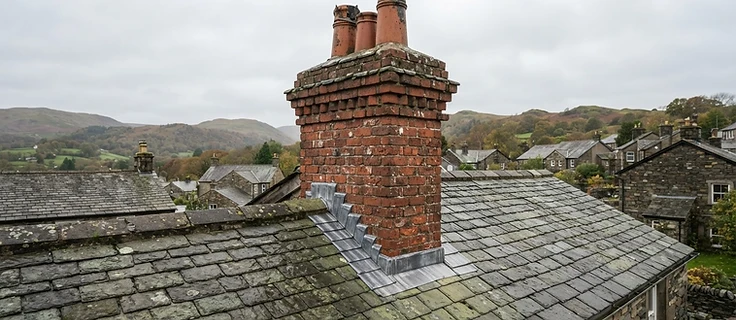
What the problem usually is
A chimney stack is a slender piece of masonry standing on its own above the roof, carrying wind load and taking weather from every direction. Over time the mortar goes, water gets into the core, frost breaks up the brick faces and the top courses start to loosen. Stack repairs cover cutting out and replacing damaged bricks, rebedding loose masonry, renewing the flaunching that holds the pots, and rebuilding sections that have gone beyond repair.
Signs a homeowner might notice
- Brick faces flaking or blown, leaving a soft, crumbling surface
- Cracking that steps through the joints or runs through a brick
- The stack looking out of plumb, twisted or leaning against the flashing
- Pots that rock, or cracked and missing flaunching at the top
- Pieces of mortar or brick found in the gutter, on the roof or in the garden
- Damp appearing on the chimney breast in an upstairs room or in the loft
Falling masonry or obvious movement deserves a proper look before winter rather than after. That is not a reason to panic, but it is a reason to get it assessed rather than watched.
What commonly causes it
Freeze and thaw is the main mechanism, working on joints that were already open. Redundant flues make it worse, because a capped stack with no ventilation stays damp inside. Old cement patch repairs contribute as well, holding water against softer Victorian brick. On stacks with a history of sulphate attack from long term coal use, the mortar can expand and push the stack slightly out of line, which is why some old chimneys lean towards the warmer side.
Repair options
Sound stacks with weathered joints need repointing. Where a limited number of bricks have failed, they can be cut out and replaced with matched or reclaimed bricks and the area repointed. If the top courses are loose, rebuilding from a sound level down is common and often the most economical approach, since it deals with the worst of the exposure. Where damage runs through most of the stack or movement is established, a rebuild may be the more sensible use of the money. Flaunching and pots are usually addressed at the same time because access is already there.
What affects complexity
- How far down the stack the damage extends
- Number of bricks needing replacement and how closely they need matching
- Whether the flashing has to be lifted and reinstated
- Height, exposure and the pitch of the roof
- Access for scaffolding, particularly at the rear of terraces
- Whether the stack is shared with a neighbouring property
Carlisle property considerations
In the older terraced streets, stacks frequently sit on a party wall and serve both houses. That affects how the work is planned and who it needs discussing with. Slate roofs also need care, since broken slates around the base of a stack can create a leak that looks like a chimney fault. Where a property is listed or in a conservation area, check what is required before altering the appearance of the stack.
Questions worth asking
Ask how far down the stack the repair goes, what happens if more damaged brick is found once the scaffold is up, whether the leadwork is included, and how debris and making good are handled. The before you decide page sets out the rest. If you have photographs, send them with your enquiry.