What tends to go wrong
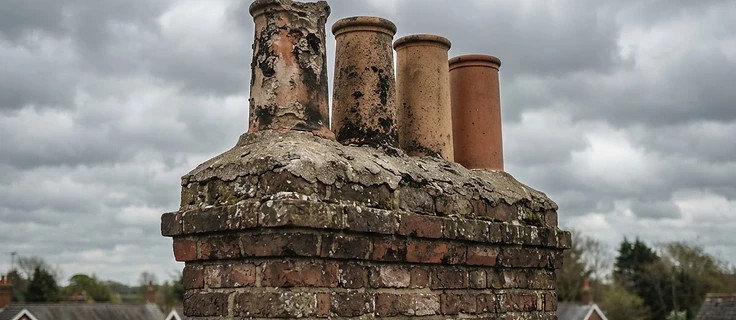
Pots are bedded into flaunching, a sloped mortar bed across the top of the stack. That mortar is fully exposed to rain, sun and frost, with no protection at all, so it is often the first thing on a chimney to fail. Once it cracks, water sits in the head of the stack, the bed loses its grip and the pot begins to move. Clay pots themselves can crack, particularly older ones that have taken decades of heat and weather.
Signs to look for
- A pot that visibly leans, or one that has shifted compared with its neighbours
- Cracks radiating across the flaunching, or lumps of it missing
- Vertical cracks or chips in the pot itself
- Lumps of mortar in the gutter, on the roof or in the garden below the stack
- Damp appearing in the head of the chimney or high on a chimney breast
- An old cowl that has rusted, come loose or filled with debris
Why it matters
A loose pot at that height is a safety issue in the sort of winds Cumbria gets, and failed flaunching lets water directly into the stack, which then works its way down through the masonry. It also accelerates the deterioration of the brickwork below, which is why pot and flaunching problems often show up alongside open mortar joints.
Repair options
Where a pot is sound but the flaunching has failed, the usual approach is to cut out the old mortar, lift and rebed the pot and form a new flaunching with a proper fall so water runs off. A cracked or badly damaged pot is better replaced while the access is there. Where several courses beneath the flaunching are also loose, the top of the stack may need rebuilding first, which is covered under stack repairs.
Cowls and caps
Cowls serve different purposes. Some keep rain out, some deter birds, some help with downdraught. The right choice depends on how the flue is used, and that varies by property and appliance. A flue serving a working stove or an open fire has different requirements to a redundant flue, and anything connected to a heating appliance should be specified with that appliance in mind rather than fitted as a general purpose cap.
On a disused flue, ventilation matters. Sealing the top completely without allowing some air movement can leave moisture trapped in the stack, which shows up later as damp on the chimney breast. A capped but vented arrangement is normally preferred.
What affects cost
- Number of pots involved
- Whether pots are being rebedded or replaced
- Type and size of replacement pot, especially where matching an older style
- Condition of the masonry directly beneath the flaunching
- Height of the stack and access arrangements
- Whether cowls are being supplied and fitted
Before agreeing to the work
Ask whether the flaunching is being fully cut out or simply patched, whether the existing pots are being reused, what cowl is proposed and why, and whether access is included in the price. There is more on this in before you decide, or you can tell us what you've noticed.