
When a repair is enough
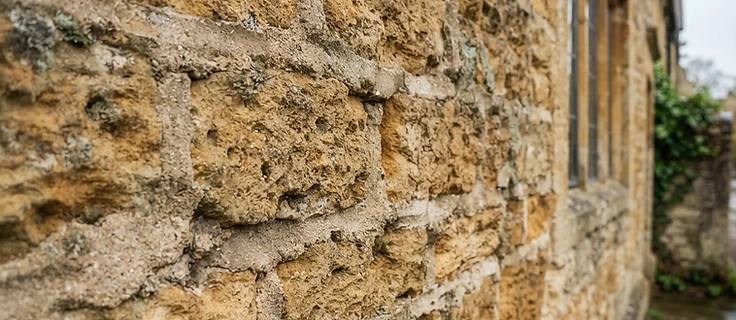
Plenty of stacks that look poor from the pavement need repointing, a few replacement bricks and new flaunching. Weathered joints, moss in the mortar and a stained face are not evidence that a stack has to come down. If the bricks ring solid, the stack is plumb and there is no stepped cracking, a repoint with localised brick replacement will usually see it through many more winters.
When rebuilding starts to make sense
The picture changes when the fabric has broken down. Bricks that have blown across several courses cannot be repointed back to health. Mortar raked out to the middle of the wall leaves little to build on. Where a stack has gone out of plumb, or a previous repair has already been patched over more than once, money spent on further pointing tends to be money spent twice. In those cases rebuilding gives a stack with sound bricks, a consistent mortar and correctly formed leadwork, all done at once while access is in place.
A partial rebuild, taking the stack down a course or two below the damage and rebuilding above, deals with most cases. Full rebuilds are less common and usually follow serious deterioration or movement affecting the whole height.
Signs that often lead to a rebuild being discussed
- Widespread spalling, with brick faces gone across several courses
- The stack visibly leaning, bowing or twisting above the roofline
- Loose top courses that move when handled
- Persistent damp inside despite previous repairs
- Layers of old cement patching hiding the condition beneath
What a rebuild involves
The stack is taken down carefully to a sound level, with slates protected and debris controlled. It is then rebuilt in bricks chosen to suit the property, using a mortar mix appropriate to the construction, with the flue arrangement maintained. Flaunching is formed at the top and the pots are rebedded or renewed. The flashings are usually renewed as the stack goes back up, because it is the natural point to form them properly. Making good inside is discussed beforehand where the work affects the roof covering.
What affects cost and complexity
- How much of the stack is being rebuilt
- Height above the roof and the pitch of the roof itself
- Brick choice, particularly where matching an older or reclaimed brick
- Number of flues and pots
- Whether the flashings are being renewed in full
- Scaffolding, rubbish removal and access at the rear of a terrace
Carlisle property considerations
In older parts of the city, stacks are often shared between two houses, so a rebuild affects both properties and should be discussed with the neighbour early. Brick matching matters more on a Victorian terrace than on a post war semi, where a standard modern brick may sit perfectly happily. On listed buildings and in conservation areas, check what consents apply before altering the appearance or height of a stack.
Questions to ask before agreeing
Ask exactly where the rebuild starts, what bricks and mortar will be used, whether pots, flaunching and leadwork are included, how debris and making good are handled, and what happens if the stack is found to be worse than expected once it is opened up. Our before you decide page covers each of these, and you can describe your chimney here.